
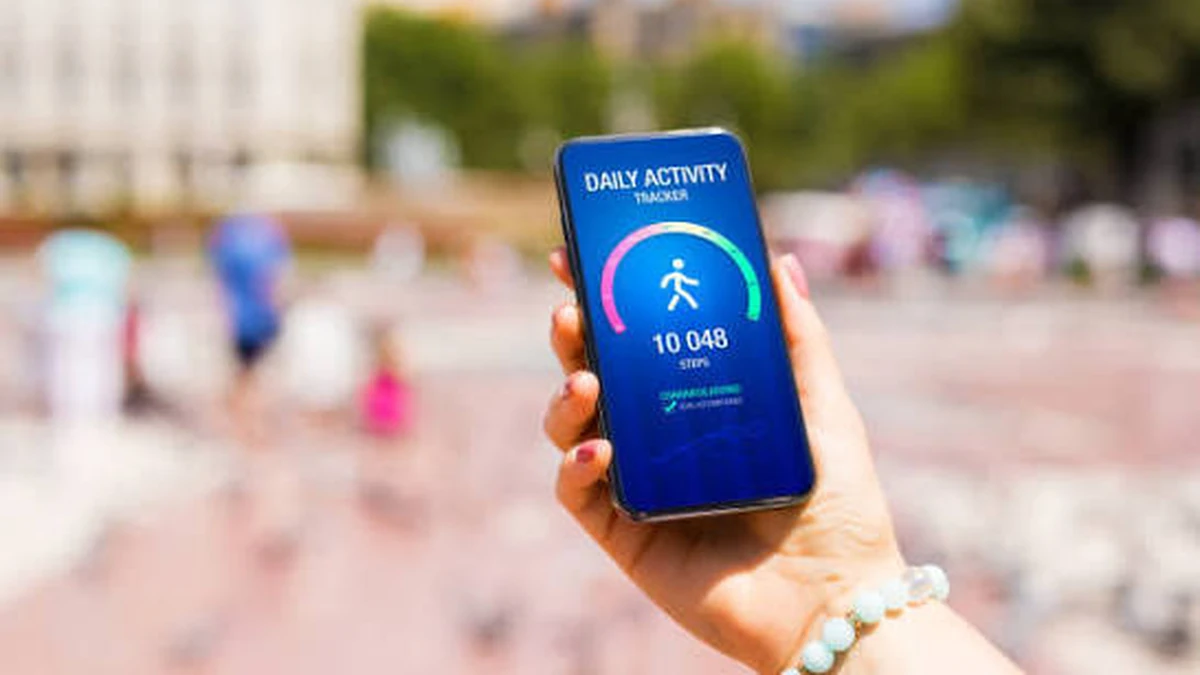

You’ve downloaded a habit tracker before. Probably more than one. You set it up on a Sunday night, felt genuinely motivated, and by week three the app was just another icon you scroll past. That’s not a willpower problem. It’s a design problem, and it’s exactly what AI habit tracker apps are supposed to fix.
AI habit tracker apps use machine learning to notice your real patterns — when you actually complete habits, when you skip them, what precedes a miss — and adjust reminders, difficulty, and coaching in real time, instead of just logging a checkbox and hoping a streak keeps you motivated.
That sounds great in theory. In practice, some of these apps genuinely use AI to change your experience day to day. Others slap “AI-powered” on a feature that’s really just an if-this-then-that rule someone coded two years ago. Below is an honest look at both kinds, so you know what you’re actually paying for.
What Actually Makes a Habit Tracker “AI” (and What’s Just Marketing)
Before comparing apps, it’s worth being blunt about a real problem in this category: the word “AI” gets used loosely. A tracker that sends you a reminder at a fixed time you set isn’t AI. A tracker that notices you consistently complete your workout habit around 6:40am on weekdays and quietly shifts your reminder to 6:25am is.
Genuine AI habit tracking usually does at least one of these things:
- Pattern detection — surfacing correlations you wouldn’t spot yourself, like a habit that only sticks after a good night’s sleep.
- Adaptive scheduling — moving reminders or blocking calendar time based on when you actually follow through, not just when you said you would.
- Predictive nudges — flagging that you’re statistically likely to break a streak today, before it happens, rather than after.
- Generative coaching or task breakdown — using a language model to turn an overwhelming goal (“get organized”) into a specific, doable next step.
Reviewers testing these tools through 2026 have been fairly consistent on one point: several well-known apps market “AI” while the underlying mechanism is closer to a structured curriculum with rule-based timing suggestions than anything adaptive. That’s not necessarily a bad app — it just isn’t doing what the label implies. Knowing the difference matters before you commit to a paid tier expecting a coach and getting a scheduler.
Why Most Habit Trackers Fail Before They Help
This is the part most roundups skip, and it’s the most useful thing you can know going in.
Habit research consistently shows a steep drop-off. Depending on the study, somewhere close to a quarter of people abandon a new habit within the first week, and by the end of January roughly four in ten resolution-style attempts have already stopped — with only a small fraction of people ever completing what they originally set out to do. Separately, tracking data suggests a large majority of people who install a habit-tracking app stop opening it within about two months.
None of that means tracking doesn’t work. It means most tools are built around the wrong failure mode. The classic model — a red chain that breaks the moment you miss a day — actively punishes the one behavior (missing occasionally) that’s completely normal and doesn’t actually predict long-term failure. What predicts failure is the spiral after the miss: one skipped day turning into “well, I already broke it” and quietly giving up.
Two things reliably help, and they show up across the better AI apps below:
- Implementation intentions — a specific “if X happens, I’ll do Y” plan measurably outperforms a vague intention to “exercise more,” in some studies by a wide margin.
- A small habit load — trying to track more than five to seven habits at once tends to drag down completion rates across all of them. Two or three is a more realistic starting point.
The 10 Best AI Habit Tracker Apps in 2026
1. Reclaim.ai — Best for calendar-based scheduling
Reclaim works through your Google Calendar or Outlook and treats habits like appointments it defends. Instead of a separate checklist, it finds and protects time blocks for your habits and reshuffles them automatically when your schedule changes. Best for people whose routines collapse the moment a meeting runs long.
2. Habitica — Best gamified AI habit tracker
Habitica turns habits, dailies, and to-dos into an RPG — you earn XP and gold, and skipped habits cost your character health. The 2026 update added AI-generated quests that adapt to your consistency patterns, making the game layer feel less static than a fixed quest list.
3. BeeDone — Best AI coaching experience
BeeDone leans hardest into “AI coach” positioning: it studies your completion patterns to suggest better times for specific habits and breaks bigger goals into smaller atomic steps so nothing feels overwhelming. Gamification is layered on top rather than being the whole product.
4. Pattrn — Best for connecting habits to mood and mindset
Pattrn logs habits alongside mood ratings and short reflections, then uses AI to surface links between them — for example, that your focus consistently dips the day after poor sleep. It’s built for people who want the “why,” not just the streak count.
5. Fhynix — Best for people who ignore push notifications
Fhynix’s differentiator is delivery, not intelligence: it sends streak reminders through WhatsApp, where open rates are dramatically higher than standard app notifications. It also offers two-way Google Calendar sync, which most competitors in this list don’t.
6. Streaks — Best minimalist option
Streaks doesn’t lean on AI language, and that’s the point. It focuses on one job — don’t break the chain — with tight Apple Health integration so physical habits log themselves. Good if the tools above feel like more than you need.
7. Way of Life — Best for data-driven habit tracking
A yes/no/skip check-in that quietly builds trend lines and weekly scoreboards over time. There’s no coaching layer, but for people who want to spot their own patterns in the raw data, it’s one of the cleaner options.
8. Beyond Time — Best for goal-linked habits
Beyond Time ties every habit to a specific goal rather than treating habits as standalone checkboxes — complete a run and your “run a half marathon” goal updates automatically. Describe a goal and its AI suggests specific supporting habits.
9. Goblin Tools — Best for task paralysis and ADHD
Not a traditional tracker, but worth including because it solves a real gap: when a habit like “clean the kitchen” feels too big to start, its “Magic To-Do” feature uses an AI model to break it into tiny, concrete steps.
10. Atoms — Best for absolute beginners
Modeled loosely on the Atomic Habits framework, Atoms deliberately limits new users to three habits and scales the difficulty up based on consistency, with short daily lessons on behavioral psychology built in. Its “AI” is closer to adaptive curriculum than generative coaching — useful, just worth knowing.
AI Habit Tracker Apps Compared
| App | Best For | Real AI Capability | Calendar Sync | Free Tier |
|---|---|---|---|---|
| Reclaim.ai | Busy, calendar-driven schedules | Adaptive time-blocking | Yes (Google/Outlook) | Limited |
| Habitica | Gamification fans | AI-generated quests | No | Yes |
| BeeDone | AI coaching feel | Pattern-based suggestions | No | Limited |
| Pattrn | Mood + habit correlation | Insight/pattern detection | No | Limited |
| Fhynix | Notification-avoidant users | Scheduling suggestions | Yes (two-way) | Limited |
| Streaks | Minimalists (iOS) | Minimal/none | No | No (paid) |
| Way of Life | Data lovers | Minimal/none | No | Limited |
| Beyond Time | Goal-to-habit linking | Habit recommendation engine | No | Yes (unlimited habits) |
| Goblin Tools | Task paralysis/ADHD | Generative task breakdown | No | Yes |
| Atoms | Complete beginners | Adaptive curriculum | No | Trial |
How to Choose the Right One for Your Situation
Skip the feature list for a second and ask three questions:
- Does my routine live in a calendar or in a checklist? If your day is already ruled by meetings, a calendar-native tool like Reclaim will fit better than a standalone app you have to remember to open.
- What actually keeps me motivated — competition, data, or reflection? Gamified tools (Habitica, BeeDone) work well for people who respond to points and streaks. Data-driven tools (Way of Life, Pattrn) suit people who want to understand themselves, not just perform for a score.
- How many habits am I really trying to build right now? Pick two or three. Add more only once those feel automatic, usually after a couple of months — not after a couple of good days.
Mistakes That Quietly Kill Your Habit Tracking
- Tracking too many habits at once. More than five or six at a time tends to lower completion across the board, not just for the extras.
- Treating a single missed day as failure. The data is clear that the spiral after a miss, not the miss itself, is what ends most attempts.
- Choosing an app for its feature list instead of its friction. If logging a habit takes longer than doing the habit, you’ll stop logging before you stop doing it.
- Ignoring the notification channel. An app with a brilliant AI engine still fails if its reminder gets buried in an unread notification tray — part of why WhatsApp- and SMS-based reminders are gaining ground.
- Assuming “AI” means the same thing across every app. Ask, specifically, what the AI does — adaptive scheduling and marketing copy are not the same feature.
What These Apps Do With Your Data
Worth saying plainly, since almost no roundup covers it: an AI habit tracker that detects patterns in your mood, sleep, or routines is processing genuinely personal behavioral data. Before subscribing, it’s reasonable to check whether the app states clearly how your data is stored, whether it’s used to train models beyond your own account, and whether you can export or delete your history. Apps built around calendar integrations (Reclaim, Fhynix) are also requesting real access to your schedule — read the permission scope, not just the feature description.
Conclusion
The honest takeaway from testing this category through 2026: the best AI habit tracker app isn’t the one with the most features — it’s the one whose reminder, friction level, and motivation style actually match how you already operate. Start with two or three habits, pick a tool that fits your real routine (calendar-based, gamified, or data-driven), and give it the two months the research says habits actually need before judging whether it worked.
If you’re not sure where to start, Reclaim.ai suits calendar-heavy schedules, BeeDone or Habitica suit people who need a motivational push, and Way of Life or Pattrn suit people who’d rather understand their own patterns than chase a streak.
CURIOUS ABOUT WHAT ELSE WE’VE COVERED? VISIT BOOLEANDREAMS RIGHT NOW.
FAQ Section
Q1: What is the best AI habit tracker app in 2026?
There isn’t one universal answer — it depends on your routine. Reclaim.ai works best for calendar-driven schedules, Habitica and BeeDone suit people motivated by gamification and coaching, and Way of Life or Pattrn fit people who prefer data over streaks.
Q2: Are AI habit tracker apps actually more effective than regular ones?
When the AI genuinely adapts reminders, timing, or coaching to your real behavior, yes — it removes friction that causes people to quit. When “AI” is just marketing for fixed rules, effectiveness is closer to a standard tracker.
Q3: What actually makes a habit tracker “AI-powered”?
Real AI features include pattern detection across your check-in history, adaptive reminder timing, predictive alerts before you break a streak, and generative coaching that breaks big goals into small steps — not just a scheduled push notification.
Q4: How long does it actually take to build a habit?
Research shows a wide range, roughly 18 to 254 days depending on the habit and person, with consistency mattering more than any fixed number of days. Plan for at least two months of deliberate effort.
Q5: How many habits should I track at once?
Start with two or three. Tracking more than five to seven at once tends to lower completion rates across all of them, not just the extras.
Q6: Is there a good free AI habit tracker app?
Yes. Habitica, Beyond Time, and Goblin Tools all offer genuinely usable free tiers; most other apps in this category cap habits or lock analytics behind a paid plan.
Q7: Do any AI habit tracker apps sync with Google Calendar?
Yes — Reclaim.ai and Fhynix both offer two-way Google Calendar sync. Most streak-focused apps like Streaks, Habitica, and Way of Life do not.
Q8: What’s the best AI habit tracker for ADHD or task paralysis?
Goblin Tools is built specifically for this — its AI breaks an overwhelming task into small, concrete steps. Apps with location- or event-based contextual reminders instead of fixed daily alarms also tend to help.
