

Artificial Intelligence (AI) projects promise speed, automation, and more intelligent decisions; however, they often fail to produce actual business value. The reason is straightforward: AI projects are not only technical projects. They involve people, ethics, and data quality, as well as changing requirements, and a high degree of risk of failure. This is why PMP-certified professionals are crucial.
AI requires strong leadership in projects, not just advanced algorithms. Companies are now realizing that without skilled PMPs, AI programs struggle due to uncertain goals, unmanaged risks, and weak collaboration between stakeholders. PMP experts provide the structure as well as accountability and judgment, which AI does not provide.
AI Is Growing Faster Than Organizations Can Manage
AI adoption is accelerating across industries, but maturity remains low. According to PMI research on “AI in Project Management”, 80% of project management tasks are expected to be supported or run by AI by 2030, yet only 1% of organizations believe they have reached true Generative AI maturity. This gap highlights a serious execution challenge.
Also, 86% of enterprises rank AI and data skills as top workforce priorities, but most struggle with governance, integration, and adoption. AI projects fail not because of a lack of tools, but because of weak planning, unclear ownership, and poor change management.
Why AI Projects Are Different from Traditional Projects
AI projects behave differently from traditional IT or construction projects.
- Requirements evolve as models learn.
- Data quality issues emerge late.
- Ethical and compliance risks grow over time.
- Outcomes are probabilistic, not guaranteed.
PMI highlights that managing AI initiatives requires continuous inspection, adaptation, and governance, not fixed plans. PMP experts are trained to work in uncertainty, manage iterative delivery, and balance scope, risk, and value.
Unlike AI tools, a PMP can interpret ambiguity, negotiate priorities, and make judgment calls when data is incomplete; something repeatedly emphasized by PMP practitioners themselves.
The Human Element AI Cannot Replace
Discussions across the global PMP community consistently highlight one truth:
| AI cannot replace human leadership. |
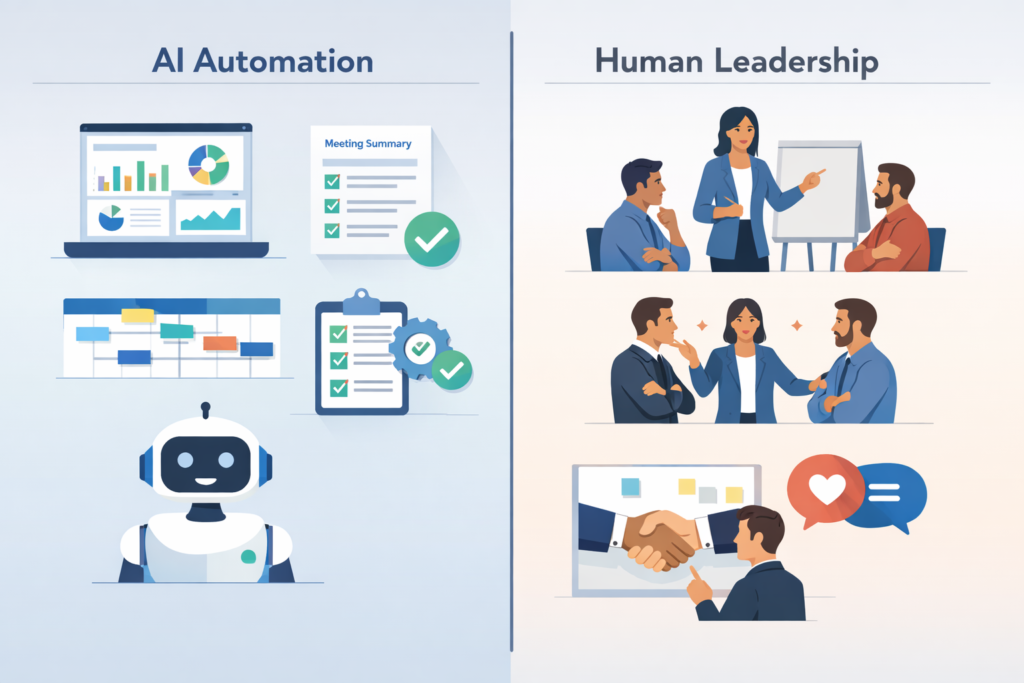
PMP professionals manage stakeholders, resolve conflicts, and guide teams through resistance, areas where AI falls short.
Multiple experienced PMPs confirm that while AI can automate reports and summaries, it cannot chair meetings, mediate disputes, or earn stakeholder trust. AI projects often fail due to misaligned expectations, not weak technology, and this is where PMP expertise is essential.
PMP Skills That Make AI Projects Successful
PMP-certified professionals bring structured skills that directly align with AI project needs:
- Stakeholder Management: Translating AI complexity into business language
- Risk Management: Identifying data bias, compliance, and ethical risks early
- Scope Control: Preventing uncontrolled experimentation and cost overruns
- Governance: Ensuring responsible AI usage and accountability
- Change Management: Helping teams adopt AI-driven ways of working
PMI’s AI-focused guidance highlights that AI success depends on aligning technology with business outcomes, not experimentation alone.
PMP + AI: A Strategic Career Advantage
There is growing concern that AI might replace project managers. However, PMI community discussions clearly show the opposite: AI exposes weak project management but amplifies strong PMs.
Organizations now look for Professionals with PMP Certification who understand AI, not to build models, but to lead AI-driven transformation. PMI itself positions project professionals as leaders of both “AI transformation” and “the project management of AI transformations.”
This shift creates strong demand for PMP-certified professionals who combine governance, leadership, and AI awareness, making PMP certification more relevant than ever.
Conclusion
AI projects do not fail because of technology. They fail because of unclear goals, unmanaged risks, and a lack of human leadership. PMP experts bring the structure, discipline, and judgment needed to turn AI investments into real business value.
As AI reshapes how work gets done, PMP professionals will not disappear; they will become even more important. Organizations that pair AI capabilities with strong PMP leadership are the ones most likely to succeed in the AI-driven future.
