
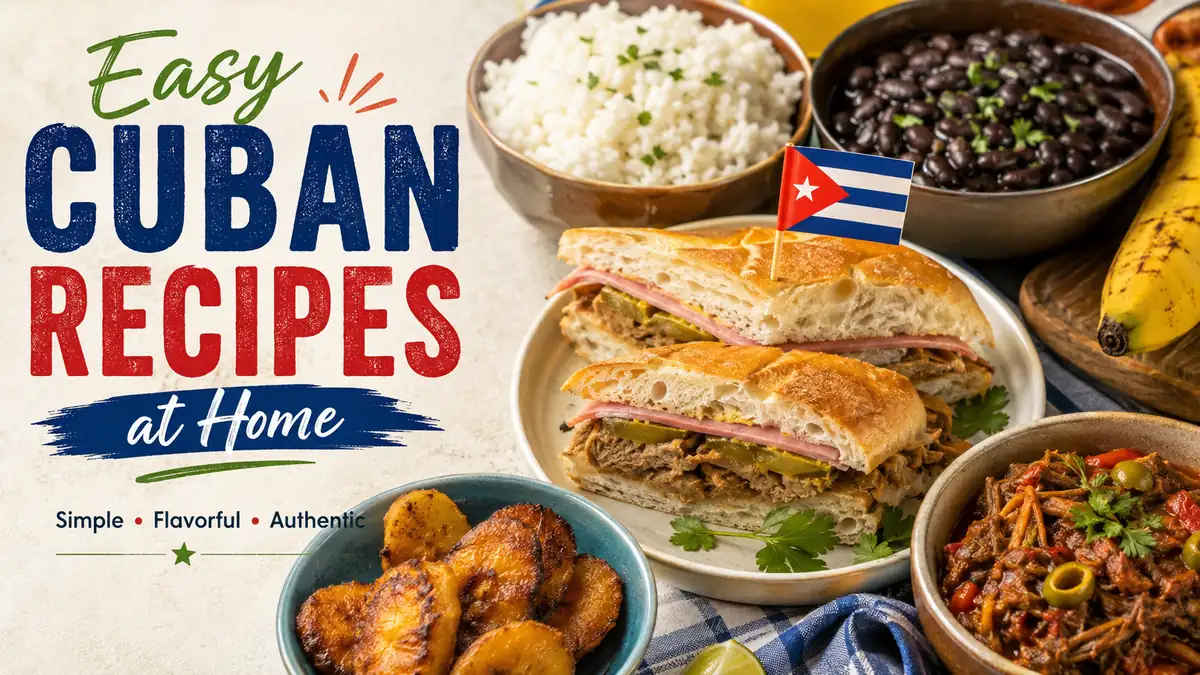

Cuban food has a reputation for deep, slow-cooked flavor, but that does not mean every meal requires hours in the kitchen. Some of the most satisfying Cuban dishes rely on a surprisingly small group of everyday ingredients: garlic, onions, peppers, citrus, rice, beans, plantains, and well-seasoned meat.
If you are searching for easy cuban recipes at home, start with dishes such as picadillo, Cuban black beans, pollo a la plancha, tostones, yuca con mojo, and ropa vieja. Learning a simple sofrito and garlic-citrus mojo gives you the foundation for recreating many classic Cuban flavors in an ordinary home kitchen.
Traditional Cuban cooking reflects Spanish, African, Caribbean, and other culinary influences. Rice, black beans, root vegetables, pork, beef, citrus, and plantains appear frequently, while dishes such as ropa vieja are commonly served with rice, beans, and maduros.
Here are ten approachable recipes that make a good introduction.
What Makes Easy Cuban Recipes at Home Taste Cuban?
Before cooking individual dishes, it helps to understand the flavor foundations. Cuban cuisine is generally savory, aromatic, citrusy, and garlicky rather than intensely spicy.
Sofrito builds the savory base
Sofrito usually starts with ingredients such as:
- Onion
- Garlic
- Bell pepper
- Olive oil
- Tomato or tomato sauce in some preparations
- Oregano and other seasonings depending on the dish
The vegetables are slowly sautéed until soft and aromatic. This simple step creates the foundation for black beans, picadillo, stews, and numerous rice dishes.
One common beginner mistake is rushing sofrito. Give the onion and pepper enough time to soften before adding liquids.
Mojo brings garlic and citrus
Mojo is another flavor worth learning. Cuban-style mojo commonly combines plenty of garlic with citrus and oil. It can be used with pork, chicken, yuca, vegetables, or as a dipping sauce.
The combination works particularly well because citrus provides acidity while garlic and oil add richness.
Keep these Cuban cooking staples around
You do not need a specialty pantry to begin. A useful starter collection includes white rice, black beans, green and ripe plantains, yuca, garlic, onions, bell peppers, tomato sauce, oregano, cumin, bay leaves, olives, olive oil, lime, and orange.
With those ingredients available, several traditional-style meals become surprisingly practical.
1. Easy Cuban Picadillo
If you want one dish to introduce you to Cuban home cooking, make picadillo.
Cuban picadillo is a ground-beef dish commonly prepared with tomato, olives, seasonings, and sometimes potatoes, raisins, and capers. Current recipe variations demonstrate how flexible the dish can be while retaining its characteristic savory-sweet profile.
Ingredients
- 1 pound ground beef
- 1 small onion, finely chopped
- 1 green bell pepper, chopped
- 3 garlic cloves, minced
- 1 cup tomato sauce
- 1 small potato, diced
- 1/3 cup green olives
- 1 teaspoon ground cumin
- 1 teaspoon dried oregano
- 1 bay leaf
- 2 tablespoons olive oil
- Salt and black pepper
- 2 tablespoons raisins, optional
- 1 tablespoon capers, optional
How to make it
- Heat olive oil in a large skillet over medium heat.
- Add onion and bell pepper and cook until softened.
- Stir in garlic and cook briefly until fragrant.
- Add ground beef and break it into small pieces as it browns.
- Stir in tomato sauce, potato, olives, cumin, oregano, and bay leaf.
- Add raisins or capers if you enjoy them.
- Cover and simmer for about 20 minutes, or until the potatoes are tender.
- Remove the bay leaf and adjust the seasoning.
Serve picadillo over white rice with black beans or sweet plantains.
Quick takeaway: Picadillo is particularly useful for beginners because it is essentially a one-pan meal, and ground beef becomes flavorful without a long braise.
2. Cuban Black Beans and Rice
Black beans and rice are among the most recognizable combinations in Cuban cooking. Cuban restaurant menus and recipe collections regularly pair frijoles negros with white rice and other traditional sides.
Using canned beans makes the dish practical for a weeknight.
Ingredients
- 2 cans black beans
- 1 small onion, diced
- 1/2 green bell pepper, diced
- 3 garlic cloves, minced
- 1 teaspoon cumin
- 1 teaspoon oregano
- 1 bay leaf
- 1 tablespoon olive oil
- 1 teaspoon vinegar
- Salt and black pepper
- Cooked white rice
How to make it
Heat the olive oil and sauté the onion and bell pepper until tender. Add garlic, cumin, and oregano.
Pour in the beans with some of their liquid and add the bay leaf. Simmer uncovered for approximately 15–20 minutes, allowing the liquid to thicken slightly.
Finish with vinegar and adjust the salt.
Spoon the beans beside or over freshly cooked white rice.
How do you make canned black beans taste homemade?
The trick is not simply heating them.
Cook aromatics first, add spices before the beans, then let everything simmer together. A small amount of vinegar added near the end brightens a dish that might otherwise taste flat.
If the beans become too thick, add a splash of water.
3. Pollo a la Plancha for a Fast Cuban Dinner
Pollo a la plancha is an excellent option when you want Cuban flavor without preparing a stew.
It is essentially thin, seasoned chicken cooked quickly on a hot skillet or griddle. Cuban-style pollo a la plancha is frequently paired with white rice and black beans.
Ingredients
- 4 thin chicken breasts or cutlets
- 4 garlic cloves, minced
- Juice of 2 limes
- 2 tablespoons olive oil
- 1 teaspoon oregano
- 1/2 teaspoon cumin
- Salt and black pepper
- 1 onion, thinly sliced
How to make it
Combine garlic, lime juice, olive oil, oregano, cumin, salt, and pepper.
Coat the chicken and allow it to marinate for about 20–30 minutes.
Heat a skillet over medium-high heat. Cook the chicken for several minutes on each side until browned and safely cooked through.
Remove the chicken, then sauté the sliced onions in the same pan until soft and lightly browned. Spoon them over the chicken.
Serve with rice, beans, avocado, or plantains.
What actually makes the difference?
Thin chicken cooks quickly and develops more browned surface area. A thick chicken breast can become dry on the outside before the center finishes cooking, so pound thicker pieces to an even thickness first.
4. Easy Cuban Recipes at Home: Ropa Vieja
Ropa vieja is one of Cuba’s most famous dishes. It consists of tender shredded beef cooked with tomato, onion, peppers, garlic, and seasonings and is widely identified as Cuba’s national dish.
The name translates to “old clothes,” referring to the shredded appearance of the beef.
Although it takes longer than picadillo, most of that time is unattended simmering.
Ingredients
- 2 pounds flank or chuck steak
- 1 onion, sliced
- 1 green bell pepper, sliced
- 1 red bell pepper, sliced
- 4 garlic cloves
- 1 1/2 cups crushed tomatoes or tomato sauce
- 1 cup beef broth
- 1 teaspoon cumin
- 1 teaspoon oregano
- 1 bay leaf
- 1/3 cup green olives
- 2 tablespoons olive oil
- Salt and black pepper
How to make it
- Season the beef with salt and pepper.
- Brown it in olive oil in a heavy pot.
- Remove the meat and sauté onion and peppers.
- Add garlic and cook until fragrant.
- Stir in tomatoes, broth, cumin, oregano, and bay leaf.
- Return the beef to the pot.
- Cover and gently simmer until the meat easily pulls apart.
- Remove and shred the beef with two forks.
- Return it to the sauce and add the olives.
- Simmer for another 10–15 minutes.
Chuck roast is a practical substitute if flank steak is expensive or unavailable.
Serve ropa vieja with white rice, black beans, and maduros for a fuller Cuban-style plate.
Can ropa vieja be made ahead?
Yes. It is actually an excellent make-ahead dish because the shredded beef has additional time to absorb the sauce.
Cool leftovers promptly, refrigerate them in a covered container, and reheat gently with a small splash of broth or water if the sauce has thickened.
5. Tostones: Crispy Fried Green Plantains
Tostones are green plantains that are fried, flattened, and fried again until crisp. They are widely served as a Cuban side dish or appetizer, often accompanied by garlic mojo.
Do not confuse them with maduros. Tostones use green, unripe plantains, while maduros use ripe, sweet ones.
Ingredients
- 2 green plantains
- Neutral frying oil
- Salt
- Garlic mojo for serving, optional
How to make them
Peel the plantains and cut them into thick rounds.
Heat about an inch of oil in a sturdy pan. Fry the pieces until they begin turning golden but are not completely crisp.
Remove them and flatten each piece with the bottom of a glass, plate, or a traditional tostonera.
Return them to the hot oil and fry again until crisp and golden.
Drain on paper towels or a rack and season immediately with salt.
Why are my tostones not crispy?
Three issues commonly cause disappointing tostones:
- Using ripe rather than green plantains
- Not flattening them enough after the first fry
- Frying in oil that is not sufficiently hot
Serve them immediately. Like most fried foods, they lose crispness as they sit.
6. Yuca con Mojo
Yuca con mojo proves that simple ingredients can produce a memorable side dish.
Yuca, also called cassava, is boiled until tender and paired with a garlicky citrus sauce. It commonly accompanies roast pork, black beans, rice, and grilled meats.
Ingredients
- 2 pounds peeled yuca
- 6 garlic cloves
- 1/3 cup olive oil
- 1 small onion, thinly sliced
- Fresh lime or sour-orange juice
- Salt
How to make it
Cut the yuca into manageable chunks and remove any tough fibrous core you encounter.
Boil in salted water until completely tender.
Meanwhile, gently warm olive oil with garlic and onion. The garlic should become fragrant without burning.
Remove the pan from direct heat before carefully adding citrus juice.
Drain the yuca and spoon the warm mojo over it.
What does yuca taste like?
Yuca is mild, starchy, and slightly sweet. Its texture falls somewhere between a potato and a denser root vegetable, which makes the bright garlic-citrus mojo especially effective.
Frozen peeled yuca can save considerable preparation time.
Quick takeaway: If peeling fresh cassava feels intimidating, frozen yuca is one of the easiest shortcuts for Cuban cooking at home.
7. Plátanos Maduros
If you prefer sweet plantains, make maduros.
Unlike tostones, these use very ripe plantains. A plantain with yellow-and-black or mostly black skin may look overripe, but that is exactly when its natural sugars are ideal for frying.
Maduros are commonly served alongside Cuban rice, beans, and meat dishes.
Ingredients
- 2 very ripe plantains
- Neutral oil
- Pinch of salt
How to make them
Peel the plantains and slice them diagonally into thick pieces.
Heat a shallow layer of oil over medium heat. Fry the plantains until deeply golden and caramelized on one side, then turn them carefully.
Drain briefly and add a tiny pinch of salt.
No added sugar is necessary when the plantains are properly ripe.
Tostones vs. maduros
| Feature | Tostones | Maduros |
|---|---|---|
| Plantain | Green | Very ripe |
| Flavor | Savory | Sweet |
| Texture | Crisp | Soft, caramelized |
| Technique | Fried twice | Fried once |
| Best with | Mojo, meats, beans | Rice, beans, beef, pork |
Knowing this difference eliminates one of the most common sources of confusion for people cooking plantains for the first time.
8. Arroz Congrí
Once you are comfortable with black beans and white rice, try arroz congrí.
Rice-and-bean dishes are an important part of Cuban cooking, and versions commonly combine rice with beans and aromatics such as onion, garlic, and peppers.
Simple home version
You will need:
- 1 cup long-grain rice
- 1 can black beans
- 1 small onion
- 1/2 green bell pepper
- 3 garlic cloves
- 1 teaspoon cumin
- 1/2 teaspoon oregano
- 1 bay leaf
- Olive oil
- Salt
- Water or broth as needed
Sauté the onion and bell pepper in oil. Add garlic, cumin, and oregano.
Stir in the rice, beans, some bean liquid, bay leaf, and enough additional liquid to cook the rice according to its package requirements.
Bring to a boil, cover, reduce the heat, and cook until the rice is tender and the liquid has been absorbed.
Rest the pot for several minutes before fluffing the rice.
Avoid mushy rice
Measure your total liquid rather than adding bean liquid on top of the normal amount of water.
The liquid from the beans counts toward the amount needed to cook the rice.
That small detail makes the difference between distinct grains and soggy rice.
9. Quick Garlic Shrimp Cuban Style
Seafood also fits naturally into a Cuban-inspired weeknight menu. Garlic shrimp, or camarones al ajillo, offers plenty of flavor without long cooking.
Ingredients
- 1 pound large shrimp, peeled and deveined
- 5 garlic cloves, thinly sliced or minced
- 2 tablespoons olive oil
- 1 tablespoon butter, optional
- Fresh lime juice
- Chopped parsley or cilantro
- Salt and black pepper
- Pinch of cumin, optional
How to make it
Pat the shrimp dry and season lightly.
Heat olive oil in a skillet and gently cook the garlic. Do not let it become dark brown.
Increase the heat, add the shrimp, and cook briefly on each side until opaque.
Finish with lime juice and herbs.
Serve immediately with white rice, black beans, yuca, or plantains.
The most common mistake here is overcooking the shrimp. Once they are opaque and curled, get them out of the pan.
10. Cuban Café con Leche and Tostada
Cuban food at home does not have to mean a large dinner.
Café con leche and buttered Cuban toast form a classic breakfast combination. Café con leche pairs strong Cuban-style coffee with hot milk, while tostada cubana is pressed, buttered Cuban bread.
For café con leche
You need:
- Strong espresso or Cuban-style coffee
- Hot milk
- Sugar to taste
Brew strong coffee. Warm the milk separately and combine the two according to your preferred strength.
Sweeten to taste.
For tostada
Slice Cuban bread lengthwise, spread it with butter, then press or toast it until the outside is crisp and the center is warm.
If authentic Cuban bread is unavailable, choose a light bakery loaf with a relatively thin crust rather than a dense artisan sourdough.
Dip the warm toast into café con leche for an easy Cuban-style breakfast.
How to Build a Complete Cuban Meal
You do not need to cook five elaborate recipes at once. Think in terms of a simple formula:
Main dish + rice + beans + plantain or yuca
For example:
| Main | Rice/Beans | Side | Difficulty |
|---|---|---|---|
| Picadillo | White rice + black beans | Maduros | Easy |
| Pollo a la plancha | White rice + black beans | Tostones | Easy |
| Ropa vieja | White rice + black beans | Maduros | Moderate |
| Garlic shrimp | Arroz congrí | Yuca con mojo | Easy |
| Roast pork | Congrí | Yuca con mojo | Moderate |
This approach also makes meal planning easier. Prepare a large batch of rice and black beans, then change the protein and side throughout the week.
The Easiest Cuban Dinner for Beginners
If this is your first attempt at Cuban cooking, start with picadillo, white rice, and maduros.
Why this combination?
Picadillo uses ground beef rather than a large cut requiring hours of tenderizing. White rice needs minimal preparation. Ripe plantains require only slicing and frying.
Once you are comfortable with those three components, add Cuban black beans.
Your progression might look like this:
- First meal: Picadillo + white rice
- Second meal: Add maduros
- Third meal: Make black beans from canned beans
- Fourth meal: Try tostones and mojo
- Next step: Prepare ropa vieja or another slow-cooked meat
That is a much easier way to learn than attempting an elaborate Cuban feast on your first try.
How to Make Easy Cuban Recipes at Home More Authentic
Authentic cooking is not simply about following a rigid ingredient list. Technique matters.
Cook your aromatics properly
Garlic, onions, and peppers should smell rich and sweet before the rest of the dish develops around them.
Do not burn the garlic. Burnt garlic can make an entire pot taste bitter.
Use citrus for balance
Lime and sour orange help cut through rich meat, oil, and starch. If sour oranges are unavailable, home cooks often approximate that tart citrus character with a combination of orange and lime.
Don’t make everything spicy
Cuban cuisine is deeply seasoned, but many classic dishes are not built around chile heat.
Cumin, oregano, bay leaf, garlic, onion, pepper, citrus, and olives can create considerable flavor without making food hot.
Choose the right plantain
Plantain ripeness changes the dish completely.
Use firm green plantains for crisp tostones. Use heavily spotted or blackened ripe plantains for sweet maduros.
Salt in stages
Season meat before cooking, taste sauces during simmering, and make a final adjustment before serving.
This gives you better control than adding a large amount of salt at the end.
Can You Make Cuban Food Without Specialty Ingredients?
Absolutely.
Most easy cuban recipes at home can be made with supermarket ingredients. The biggest potential challenges are Cuban bread, sour oranges, certain cuts of meat, and fresh yuca, but none should stop you from cooking.
Useful substitutions include:
- Sour orange: orange juice mixed with lime
- Fresh yuca: frozen peeled yuca
- Cuban bread: a light French or Italian-style loaf when necessary
- Flank steak for ropa vieja: chuck roast
- Dried black beans: canned black beans for faster meals
Substitutions may change the final result slightly, but they can make Cuban-inspired home cooking far more accessible.
Which Cuban Recipes Can Be Prepared Ahead?
Several of the best Cuban dishes are well suited to meal preparation.
Ropa vieja and picadillo can be cooked ahead and reheated. Black beans are also convenient for batch cooking.
Rice can be prepared in advance, but it needs proper cooling and refrigeration. Reheat leftovers thoroughly rather than repeatedly warming and cooling the same batch.
Tostones are different. They are at their best immediately after frying, so save their final fry until close to serving.
Maduros are also better freshly cooked, although reheating is possible.
Mojo can be prepared ahead and refrigerated, making it easy to add garlic-citrus flavor to vegetables and meats throughout the week.
What Is the Most Popular Traditional Cuban Food?
There is no single dish that represents every Cuban household, but ropa vieja is particularly significant and is widely described as Cuba’s national dish. Picadillo, black beans and rice, arroz congrí, roast pork, yuca con mojo, tostones, maduros, Cuban sandwiches, and café con leche are also closely associated with Cuban cuisine.
For home cooks, however, “popular” does not necessarily mean “best place to start.”
Picadillo is easier than ropa vieja. Pollo a la plancha is faster than roast pork. Canned black beans are more practical on Tuesday night than soaking dried beans overnight.
Learning those accessible recipes first gives you the techniques needed for more ambitious dishes later.
A Simple Cuban Menu for Your First Meal
For a complete meal without making the process overwhelming, prepare:
Main: Cuban picadillo
Starch: Steamed white rice
Beans: Quick Cuban black beans
Side: Sweet maduros
Drink: Café con leche afterward, if desired
Start the rice first. While it cooks, prepare the picadillo and beans. Fry the plantains last so they arrive at the table hot.
Once you have mastered that combination, switch the picadillo for pollo a la plancha, ropa vieja, garlic shrimp, or another favorite protein without changing the entire meal.
That modular approach is what makes Cuban-style home cooking manageable.
Final Thoughts on Easy Cuban Recipes at Home
The best way to learn easy cuban recipes at home is not by trying to master the entire cuisine at once. Learn the foundations: make a flavorful sofrito, understand garlic-citrus mojo, cook rice properly, season black beans, and recognize when a plantain should become tostones rather than maduros.
Begin with picadillo or pollo a la plancha when you need a straightforward dinner. Move on to ropa vieja when you have time for slow cooking. Add Cuban black beans, arroz congrí, yuca con mojo, sweet plantains, and crispy tostones as you become more comfortable.
With garlic, onions, peppers, citrus, rice, beans, and plantains in your kitchen, you already have the building blocks for an impressive range of Cuban meals.
